
Buying a Smoky Mountain Cabin as a Vacation Rental Investment: What You Need to Know Before You Purchase
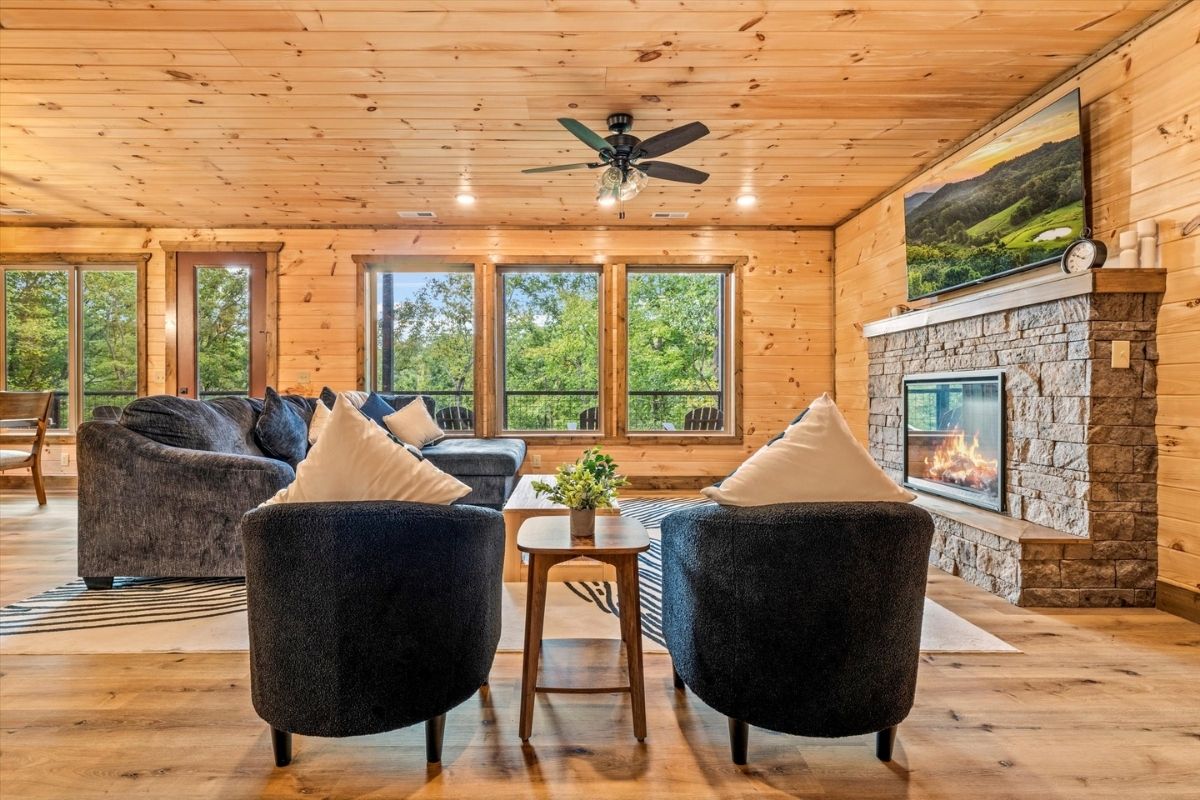
The Smoky Mountain region is one of the most popular vacation rental investment markets in the country — and for good reason. Sustained year-round demand, a strong drive-market guest base, a wide range of property types and price points, and a tourism economy that has grown consistently for decades make it a market worth taking seriously.
It's also a market where the gap between a well-purchased, well-managed investment and a poorly purchased or poorly managed one is wide enough to make the difference between a cabin that builds wealth and one that consumes it.
This post is for people who are seriously considering buying a Smoky Mountain cabin as a vacation rental investment — not to oversell the opportunity, but to give you the honest framework for evaluating it that most real estate agents and property managers won't.
This is not financial or legal advice. It's a practical overview of what experienced Smoky Mountain vacation rental owners wish they had known before they bought. Talk to a financial advisor, a real estate attorney, and a tax professional before making any investment decision.
Understand the Market Before You Evaluate Any Property
Before you look at a single listing, spend time understanding the market you're buying into. The Smoky Mountain vacation rental market is not monolithic — performance varies significantly by location, property type, price point, and the specific guest profile a cabin attracts.
Gatlinburg tends to attract nature-first travelers who want mountain proximity and walkable access to town. Cabins here often command premium rates because of the destination's cachet, but competition is intense and guest expectations are high.
Pigeon Forge draws guests who want the full Smoky Mountain entertainment experience — Dollywood, the Parkway, attractions, dining, and easy access to the national park. It's a high-volume market with strong demand across a wide range of property types.
Sevierville offers more space, easier drive-in access, and a slightly different guest profile — families, groups, and longer-stay travelers who want value and proximity to everything without being in the middle of it.
Wears Valley attracts guests specifically seeking quiet and privacy — the "peaceful side of the Smokies" positioning that commands a premium for the right property but requires a different marketing approach than the higher-traffic markets.
Douglas Lake serves a distinct guest profile — water-access travelers looking for boating, fishing, and lake living with the mountains in reach. A different product than a mountain cabin, with its own demand patterns.
Understanding which market you're buying into — and which guest profile you're targeting — shapes every other decision you'll make, from property selection to financing assumptions to management approach.
The Numbers That Actually Matter for Vacation Rental Purchases
Real estate agents selling vacation rental properties will typically show you one of two income figures: either the current owner's actual rental history, or a projection prepared by a property management company with a financial interest in winning your business. Both deserve skepticism.
Actual rental history from the current owner is the most relevant data point, but it reflects how that owner managed the property — their pricing strategy, their platforms, their marketing, their responsiveness. A cabin that's been self-managed conservatively may significantly underperform what the same cabin could earn under professional management, and the historical numbers won't tell you that.
Income projections from property managers are almost always built around optimistic assumptions. Ask any manager who provides a projection to show you comparable properties in their current portfolio — actual properties of similar size, location, and amenity profile — and their actual annual performance. A manager who can't or won't show you real comparables is showing you a number designed to win your business, not inform your decision.
The financial metrics worth building your underwriting around:
Gross rental revenue. What the property realistically earns annually before expenses. Build this from comparable properties' actual performance, not projections.
Operating expenses. Management fees, cleaning costs, maintenance, utilities, supplies, insurance, property taxes, HOA fees if applicable, and a reserve for capital expenditures. Vacation rental operating expenses are higher than most buyers expect — budget 35 to 50 percent of gross revenue for total operating costs before debt service, depending on management structure and property age.
Net operating income (NOI). Gross revenue minus operating expenses. This is the number your investment actually produces before financing costs.
Debt service coverage ratio (DSCR). Net operating income divided by annual debt service (mortgage payments). Lenders financing vacation rental properties typically want to see a DSCR of 1.25 or higher — meaning the property generates at least 25 percent more income than it needs to cover the mortgage. Properties that don't meet this threshold in realistic projections are risky investments regardless of how appealing the cabin is.
Cap rate. Net operating income divided by purchase price. Cap rates in the Smoky Mountain vacation rental market vary by location and property type, but this metric allows you to compare investment efficiency across different properties and price points.
Location Factors That Drive Performance
Within any specific market, specific location characteristics have an outsized impact on rental performance. These are worth evaluating carefully for any property you're considering.
Views. Mountain view cabins consistently command higher rates and stronger occupancy than comparable cabins without views. A cabin with a genuine, unobstructed mountain view is a fundamentally different product than one without — and the premium it commands compounds over the life of the investment.
Access. Road conditions matter in the Smokies. A cabin on a paved road accessible year-round in any weather is a different product than one on a steep gravel road that becomes inaccessible in ice or heavy rain. Access issues generate guest complaints, affect your ability to attract certain guest profiles, and complicate maintenance and cleaning logistics. Evaluate access conditions in winter — not just in the pleasant weather when you're touring the property.
Privacy. Guests searching for Smoky Mountain cabins frequently filter for privacy — no visible neighbors, a secluded setting, the feeling of being alone in the mountains. Cabins that deliver genuine privacy command a premium over those in denser developments, even with similar amenities.
Proximity to attractions. For cabins targeting the Pigeon Forge and Gatlinburg guest profile, proximity to Dollywood, the Parkway, and the national park entrance matters. A cabin that's forty-five minutes from Gatlinburg is competing in a different market than one that's fifteen minutes away.
HOA restrictions. Some cabin communities in the Smoky Mountain region have homeowner associations with restrictions on short-term rental activity — minimum stay requirements, noise ordinances, occupancy limits, or in some cases outright prohibitions on vacation rental use. Confirm the HOA status and any rental restrictions before you purchase, not after.
Regulatory Considerations
Short-term rental regulations in the Smoky Mountain region have evolved over the past decade and continue to change. Before purchasing any vacation rental property, understand the regulatory environment in the specific jurisdiction — county and municipality — where the property sits.
Sevier County has been relatively permissive toward short-term rental activity compared to many markets nationally, which is one of the reasons the Smoky Mountain market has developed the depth it has. But local regulations around business licensing, occupancy taxes, safety inspections, and permit requirements apply and are worth confirming.
City-specific regulations in Gatlinburg, Pigeon Forge, and Sevierville may differ from county-level rules. If the property you're considering is within city limits, confirm the city's specific requirements.
Occupancy taxes. Tennessee requires vacation rental operators to collect and remit state sales tax and local occupancy taxes on short-term rental revenue. The major platforms (Airbnb, VRBO) collect and remit some of these taxes automatically in many jurisdictions — confirm which taxes are handled by the platform and which require direct remittance by the owner or manager.
Regulatory requirements change. What's true today may be different in two years. Build regulatory compliance into your operating cost assumptions and stay informed about proposed changes in the jurisdictions where you own.
The Amenity Question for Buyers
When evaluating a property for purchase, think about amenities in two ways: what's already there, and what you'd need to add to make the cabin competitive in the market.
A cabin without a hot tub in a market where most competing properties have one is starting at a disadvantage that costs money to overcome — either through underpricing or through the capital expense of adding the amenity after purchase. Factor the cost of competitive amenity parity into your purchase analysis, not just the as-is income potential.
Conversely, a cabin with a private pool, a well-equipped game room, a theater room, and mountain views is a genuinely premium product that commands rates and attracts guests that a basic cabin in the same area cannot. The purchase price premium for a fully amenitized cabin is often justified by the income differential — but model it carefully rather than assuming it.
Financing a Vacation Rental Property
Vacation rental financing is different from primary residence financing in several important ways.
Down payment requirements. Most conventional lenders require 20 to 25 percent down for vacation rental investment properties. Some lenders offer lower down payments for properties that meet certain criteria, but expect to bring meaningful equity to the purchase.
DSCR loans. Debt service coverage ratio loans have become a common financing vehicle for vacation rental properties. These loans underwrite based on the property's rental income rather than the borrower's personal income — which can be advantageous for self-employed buyers or those with complex income situations. They typically carry slightly higher rates than conventional financing.
Short-term rental lenders. A growing number of lenders specialize in vacation rental financing and are familiar with the Smoky Mountain market specifically. Working with a lender who understands vacation rental income dynamics will produce a more accurate and less frustrating underwriting process than a conventional lender trying to fit a vacation rental into a residential mortgage framework.
Interest rates and cash flow. At current interest rate levels, it's worth stress-testing your cash flow assumptions carefully. A cabin that cash-flows positively at today's rates may look different if rates rise further or if income assumptions prove optimistic. Build conservatism into your projections and know what your breakeven occupancy looks like.
The Management Decision
One of the most important decisions you'll make as a vacation rental buyer is how the property will be managed — and ideally, that decision should be made before you close, not after.
The management approach affects your income projections (and therefore your underwriting), your operating expense assumptions, your lifestyle expectations, and ultimately how the investment performs over time. A property you plan to self-manage has different financial characteristics than one managed by a professional company, and those differences should be reflected in your purchase analysis.
If you're buying a cabin with the intention of professional management, talk to property managers in the market before you purchase — not after. A good manager can tell you whether a specific property is a good rental candidate, what it realistically might earn, what the competitive landscape looks like, and whether there are concerns about the property that aren't visible in a real estate listing.
That conversation is one we're happy to have. Colonial Properties has been managing Smoky Mountain vacation rentals since 2005, and we talk to prospective buyers regularly — helping them evaluate whether a specific property makes sense as a rental investment before they commit to purchasing it. There's no obligation, and the conversation is genuinely useful regardless of whether you end up buying or not.
Is a Smoky Mountain Cabin the Right Investment for You?
The honest answer depends on your financial situation, your risk tolerance, your management approach, and whether you've done the analysis to understand what you're actually buying.
The Smoky Mountain vacation rental market is strong. The demand is real, sustained, and growing. The best-managed cabins in this market generate meaningful returns and build value over time. But the market is also competitive, the costs are real, and the gap between a well-purchased and a poorly purchased investment is wide enough to matter.
Go in with honest numbers, understand what you're buying, have a management plan before you close, and treat the decision with the seriousness a significant real estate investment deserves. The owners who do that consistently are the ones who look back on the decision as one of the best they ever made.
Ready to Talk Through a Specific Property?
If you're evaluating a cabin purchase and want a market-informed perspective on its rental potential, our Owner Success Team is happy to have that conversation.
Schedule a call — no obligation, no pressure.
Or start with our free rental income calculator to get a baseline estimate for a property you're considering.

