
Maximizing Your Smoky Mountain Cabin's Summer Revenue: What Owners Need to Know
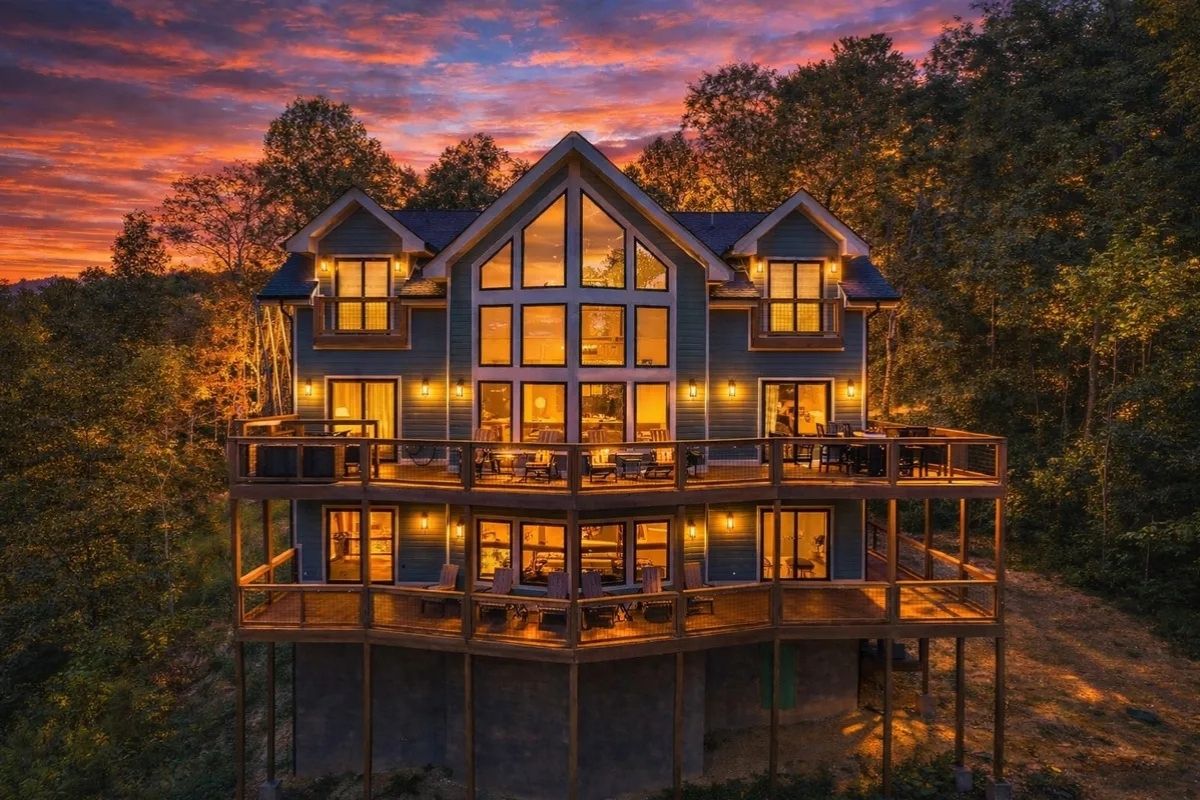
Summer is the second-highest revenue season in the Smoky Mountain vacation rental market — behind fall foliage in most years, and competitive with it in others. It's also the most operationally demanding season, the one most shaped by a specific guest profile, and the one where the gap between a well-prepared cabin and an underprepared one shows up most clearly in both revenue and reviews.
This post covers what summer demand in the Smokies actually looks like, what drives it, how to price and prepare for it, and where the most common summer management mistakes happen. If you own a Smoky Mountain cabin and summer isn't performing at the level you expected, this post will tell you why — and what to do about it.
What Summer Demand Looks Like in the Smokies
The Family Market Dominates
Summer in the Smoky Mountains is primarily a family market. School calendars drive the booking window — families plan summer trips in late winter and early spring, which means the bookings that fill your July calendar are often made in February and March. Owners and managers who aren't thinking about summer pricing until May are already working with a partially filled calendar.
The family guest profile has specific implications for what cabins perform well in summer. Families need space — enough bedrooms to separate sleeping arrangements, enough bathrooms to prevent morning bottlenecks, enough common area for everyone to be comfortable. They need amenities that keep children engaged — game rooms, pools, outdoor spaces, proximity to Dollywood and other family attractions. And they need a cabin that's genuinely ready for the wear that comes with multiple children and a full household operating for a week.
Peak Weeks and the Extended Summer Season
Summer demand in the Smokies extends roughly from Memorial Day through Labor Day, with the highest concentration of bookings in July — particularly the week of the Fourth of July, which is one of the highest-demand periods of the entire year.
Peak summer weeks worth specific pricing attention:
- Memorial Day weekend (late May): Strong demand, books early, three-night minimum appropriate
- Fourth of July week: The highest single-week demand in summer, often rivaling fall foliage peak for nightly rates
- Mid-July through early August: Sustained peak demand as school calendars align across most of the country
- Labor Day weekend: Strong closing weekend for summer, with family bookings and a transition toward couples and groups as school resumes
Shoulder summer weeks — particularly the last two weeks of August when school has resumed in many states — see a meaningful demand drop that requires pricing adjustment. The shift from peak July rates to late-August shoulder rates is one of the most important summer pricing decisions an owner makes, and getting it wrong in either direction costs money.
The Dollywood Effect
Dollywood is one of the most significant demand drivers in the Smoky Mountain market, and its impact on summer booking patterns is substantial. Families planning a Dollywood trip book cabins in Pigeon Forge and the surrounding area, and Dollywood's event calendar — including its summer programming and Splash Country operating season — shapes specific high-demand weeks beyond the standard summer peak.
Owners whose cabins are within convenient distance of Dollywood and whose listings speak to that proximity — specifically mentioning distance, parking, and practical trip logistics — consistently capture a higher share of the Dollywood-motivated booking pool than those whose listings don't surface it.
Summer Amenities: What Families Are Looking For
Summer guests filter for a specific set of amenities that differ from the fall and winter wish list. Understanding what drives summer booking decisions helps owners prioritize both existing amenity presentation and upgrade investments.
Private Pools
Private pools are the premium summer amenity in the Smoky Mountain market. A cabin with a private pool — heated, well-maintained, and photographed compellingly — occupies a fundamentally different market position in summer than one without. Families with young children specifically search for pools because they solve the problem of keeping children entertained and happy in the mountain heat without requiring constant excursions.
The rate premium for a private pool in summer is significant — often 30 to 50 percent above comparable cabins without one. The maintenance requirements are real: pool chemistry needs daily monitoring during peak use, equipment needs to be in good working order, and safety features (fencing, gates, appropriate depth markings) need to be in place. A pool that isn't maintained properly or that has safety concerns is a liability, not an asset.
Game Rooms
Game rooms are a year-round amenity but they're particularly valuable in summer, when families are looking for indoor entertainment options during the hottest part of the day or during the occasional afternoon thunderstorm that's common in the Smokies in summer. A well-equipped game room — pool table, arcade games, foosball, air hockey — gives families a reason to stay at the cabin rather than feeling like they need to be constantly out, which often translates to longer stays and better reviews.
Outdoor Spaces for Families
Outdoor living space takes on a different character in summer. Families with children need outdoor space that's safe, usable, and engaging — a flat area for kids to run, outdoor seating that accommodates a full household, shade for hot afternoons, and a fire pit for evenings when the temperature drops. Cabins with outdoor spaces designed for gathering rather than just viewing consistently outperform those with decks oriented entirely toward the view with no functional gathering area.
Kid-Friendly Interior Details
Families traveling with young children notice and appreciate details that other guests might overlook: a high chair or booster seat, a pack-and-play or portable crib, child safety features on stairs or decks, a well-stocked kitchen with the tools needed to prepare meals for a family rather than just adults. These details cost very little to provide and generate meaningful positive mentions in family reviews.
Summer Pricing: The Most Common Mistakes
Underpricing the Fourth of July
The week of the Fourth of July is consistently the highest single-demand week in the summer season — and often one of the two or three highest-demand periods of the entire year. Cabins that are priced at standard summer rates for this week are systematically leaving money on the table.
Fourth of July pricing should reflect the actual demand profile: rates meaningfully above standard summer weekend pricing, minimum stay requirements that maximize revenue per booking (typically four to five nights to capture the full holiday period), and early attention to the window — families planning Fourth of July trips often book three to four months in advance.
Flat Summer Pricing Across the Entire Season
Summer demand is not uniform from Memorial Day to Labor Day. July is significantly stronger than June, which is significantly stronger than late August. A pricing strategy that applies the same rate to all of summer fails to capture the July premium and may leave the cabin unnecessarily empty in June and late August when modest adjustments would drive occupancy.
Active summer pricing means distinct rate levels for Memorial Day weekend, June weekdays, July peak, Fourth of July week, standard July weekends, August peak, and the Labor Day shoulder — not a single "summer rate" applied uniformly.
Ignoring Booking Window Dynamics
Families book summer trips early. A cabin that isn't priced for summer until April may find that the best-qualified family guests have already booked elsewhere. Summer rate strategy should be in place by January or February — not because guests are booking that far in advance for most weeks, but because the pricing and minimum stay structure needs to be established before the booking window opens in earnest.
Last-minute summer availability — particularly in July — should be priced dynamically based on what remains unfilled and how close the dates are. A cabin with open July nights in late June has different pricing leverage than one with open July nights in early June.
Summer Operations: What the Season Demands
Summer is the most operationally demanding season in the Smoky Mountain vacation rental market, and the strain shows up in specific places.
Turnovers Are Harder in Summer
Summer turnovers — particularly Saturday-to-Saturday family bookings — concentrate checkout and check-in on the same day, creating a compressed window for cleaning, inspection, and preparation. Families with children leave more evidence of occupancy than most other guest types: kitchens that were fully used, bathrooms that serviced multiple people, outdoor spaces that saw heavy use.
The cleaning standard needs to be held regardless of the time pressure. A cabin turned over quickly but not thoroughly carries the traces of the previous family into the next guest's first impression — and that first impression goes directly into the review. The operational infrastructure to handle Saturday turnovers at summer volume — adequate housekeeping staff, a reliable inspection process, the ability to address issues discovered during inspection before the next guest arrives — is what separates consistently strong summer reviews from erratic ones.
Maintenance Demand Spikes in Summer
Summer is the season when maintenance issues surface most frequently, for two reasons: higher occupancy means more continuous use of every system and amenity, and the heat puts additional stress on HVAC systems, pool equipment, and outdoor features.
HVAC systems that were functioning adequately in spring may struggle to maintain comfortable temperatures during a hot July week with a full family in the cabin. Pool equipment that hasn't been serviced before the season may fail during peak occupancy. Hot tubs that are less visibly appealing in summer are still in use and still require maintenance attention.
Proactive summer maintenance — HVAC service before the season, pool equipment inspection and service, hot tub chemical monitoring, outdoor furniture and grill checks — reduces mid-season failures that generate both repair costs and guest complaints. Reactive maintenance during peak summer, when service providers are stretched thin and every delay affects a guest's stay, is significantly more expensive than prevention.
Guest Communication in Summer
Summer guests — particularly families — tend to have more pre-arrival questions than guests during other seasons. They're coordinating logistics for multiple people, often including children with specific needs, and they want confidence that the cabin will work for their group before they arrive. Pre-arrival communication that proactively addresses family-specific concerns — crib availability, pool hours and safety features, proximity to grocery stores, local recommendations for family activities — reduces the volume of individual questions and gets the stay started on a positive note.
During-stay communication response time matters in summer as much as any other season. A family with a pool issue on a hot July afternoon needs a fast response — not because the issue is necessarily serious, but because it's affecting the core experience they planned the trip around. Fast, effective resolution of summer issues is the path to five-star reviews from the guest type most likely to book again and refer the cabin to other families.
Marketing Your Cabin for Summer
Summer guests are looking for a different experience than fall or winter guests, and your listing should speak to it. Listings that lead with fireplace and hot tub photos in their primary set are presenting the cabin for a season that isn't summer — the guest imagining a July family trip is looking for pool shots, outdoor spaces, proximity to Dollywood, and evidence that the cabin can handle a full family in the summer heat.
Summer-specific photography — pool shots in sunlight, outdoor spaces staged for family use, nearby attraction context — improves listing performance for summer bookings. At minimum, ensure the photo order presents the cabin's summer amenities prominently when guests are browsing during the spring booking window.
Listing descriptions that speak specifically to summer — mentioning Dollywood proximity, summer activity access, pool availability, and the family-friendly features of the cabin — attract guests who are specifically searching for the summer experience rather than a generic mountain cabin.
Summer as the Foundation of Annual Revenue
For most Smoky Mountain cabin owners, summer and fall together represent the majority of annual gross revenue. How summer performs shapes the financial picture for the entire year — and the operational habits built during summer (consistent cleaning standards, active maintenance, responsive guest communication) carry forward into the rest of the seasons.
Owners who treat summer as a period to fill passively — setting rates in spring and managing reactively — consistently underperform those who approach it with the same strategic intentionality as fall foliage season. The demand is there. Capturing it fully is a management decision.
Colonial Properties manages Smoky Mountain vacation rentals through every season, with summer pricing strategy in place well before the booking window opens, proactive maintenance before the season begins, and the housekeeping and guest support infrastructure to handle peak summer volume without service degradation.
If you'd like to talk through what a strong summer strategy looks like for your specific cabin — including what it could realistically earn next summer — our Owner Success Team is happy to have that conversation.
Schedule a call with our Owner Success Team
Or get a baseline estimate with our free rental income calculator.
Colonial Properties manages vacation rentals across Pigeon Forge, Gatlinburg, Sevierville, Wears Valley, Douglas Lake, and all of Sevier County. Learn more at managemycabin.com.

