
Smoky Mountain Cabin Insurance: What Vacation Rental Owners Need to Know
Insurance is one of the most important and most overlooked aspects of owning a Smoky Mountain vacation rental. Most owners have some form of coverage in place. Far fewer have coverage that actually protects them — because the gap between what a standard homeowner's or landlord's policy covers and what a short-term rental operation actually requires is wider than most people realize.
This post is not legal or insurance advice. It's an honest overview of the insurance landscape for vacation rental owners, written to help you ask better questions of your insurance provider and understand whether your current coverage has gaps worth addressing. If anything here prompts concern about your specific situation, talk to a licensed insurance professional who works with short-term rental properties.
With that said — here's what vacation rental owners in the Smoky Mountains generally need to understand.
The Core Problem: Standard Policies Usually Don't Cover Short-Term Rentals
The most common insurance mistake vacation rental owners make is assuming their existing homeowner's policy covers short-term rental activity. In most cases, it doesn't.
Standard homeowner's insurance is written for owner-occupied properties. It covers the structure, personal belongings, and liability for incidents involving the homeowner and their guests — but "guests" in the insurance sense typically means people you've personally invited, not paying customers who found your listing on Airbnb.
When you rent your cabin to paying guests, the property's legal status changes. It's operating as a commercial hospitality business, even if it doesn't feel that way. Most homeowner's policies explicitly exclude commercial activity, which means a claim arising from a guest's stay — a guest injury, property damage caused by a guest, theft by a guest — may be denied if your insurer determines the incident occurred during a commercial rental period.
The same issue applies to standard landlord or dwelling policies, which are designed for long-term residential tenants, not rotating short-term guests with different liability profiles.
Finding out your policy doesn't cover a claim after the claim has happened is an expensive and avoidable problem.
What Short-Term Rental Insurance Actually Covers
Insurance products designed specifically for short-term vacation rentals have become significantly more robust over the past decade, partly in response to the growth of platforms like Airbnb and VRBO. A well-structured short-term rental policy typically covers:
Property damage. Coverage for physical damage to the structure and its contents, including damage caused by guests. This is distinct from security deposit claims — it's actual insurance coverage for incidents that exceed what a deposit would cover, including significant accidental damage and, in some policies, intentional damage by guests.
Liability. Coverage for bodily injury or property damage claims made by guests or third parties arising from incidents at the property. If a guest slips on your deck and pursues a claim, liability coverage is what protects you. Given the activity level at Smoky Mountain cabins — hot tubs, decks at elevation, fire pits, sometimes pools — liability coverage is not optional.
Loss of rental income. Coverage for rental income lost when the property is uninhabitable due to a covered event — fire, storm damage, major structural issue. This is particularly relevant in a market like the Smokies, where weather events can cause damage and a property might need to be taken offline for repairs during a high-demand period.
Contents and personal property. Coverage for furnishings, appliances, electronics, and other personal property in the cabin. Standard homeowner's policies often cover this for owner use but exclude items during rental periods.
Guest theft. Some policies include coverage for theft by guests — a less common but real risk in vacation rental properties.
Platform Protections Are Not a Substitute for Insurance
Both Airbnb and VRBO offer some form of host protection, and it's worth understanding what those programs actually cover — and what they don't.
Airbnb's AirCover for Hosts provides damage protection up to a stated limit for guest-caused damage, and host liability insurance for certain bodily injury and property damage claims. It's a meaningful protection layer, but it has exclusions, coverage caps, and a claims process that requires documentation and can be contested. It is not a substitute for a dedicated insurance policy.
VRBO's property damage protection is a guest-purchased add-on that covers accidental damage up to a stated limit. It does not cover liability claims against the host, and it only applies when guests purchase it — which is not guaranteed on every booking.
The bottom line: platform protections are a useful supplemental layer, not a primary coverage strategy. Relying on them exclusively leaves gaps that a dedicated short-term rental insurance policy would cover.
Insurance Options for Smoky Mountain Cabin Owners
There are several ways to structure insurance coverage for a vacation rental property. The right approach depends on how frequently the cabin is rented, whether you use it personally, and how it's owned.
Dedicated short-term rental policies. A growing number of insurers offer policies specifically designed for vacation rentals — covering the property, contents, liability, and loss of income in a single policy built for the short-term rental use case. Companies like Proper Insurance, Slice, and others have built products in this space. These policies are generally the cleanest solution for owners whose cabins are primarily operating as vacation rentals.
Homeowner's policy with a vacation rental endorsement. Some insurers will add a short-term rental endorsement to an existing homeowner's policy, extending coverage to rental periods. This works for some owners, particularly those who use the cabin personally for significant portions of the year. The key is confirming exactly what the endorsement covers and what it excludes — endorsements vary significantly by insurer and policy.
Commercial property policy. For owners with multiple vacation rental properties or those operating at a larger scale, a commercial property policy may be more appropriate than a residential product. This is worth discussing with a broker who works with short-term rental portfolios.
Landlord policy with short-term rental rider. Some landlord policies can be structured to cover short-term rental activity, though this is less common and the coverage terms vary widely. If this is how your coverage is currently structured, confirm in writing with your insurer that short-term rental activity is explicitly covered.
Specific Risks Worth Discussing With Your Insurer
The Smoky Mountain market has some risk factors worth addressing specifically in your coverage conversation:
Hot tubs. Hot tubs are a liability exposure that some policies cover and others exclude or limit. If your cabin has a hot tub — and most do — confirm that liability arising from hot tub incidents is covered, and understand any requirements around maintenance or safety features your policy imposes.
Fire pits and outdoor fire features. Open fire features are a liability consideration, particularly in wooded mountain settings. Some policies have specific requirements around fire pit placement, enclosure, and use restrictions that you need to be aware of and communicate to guests.
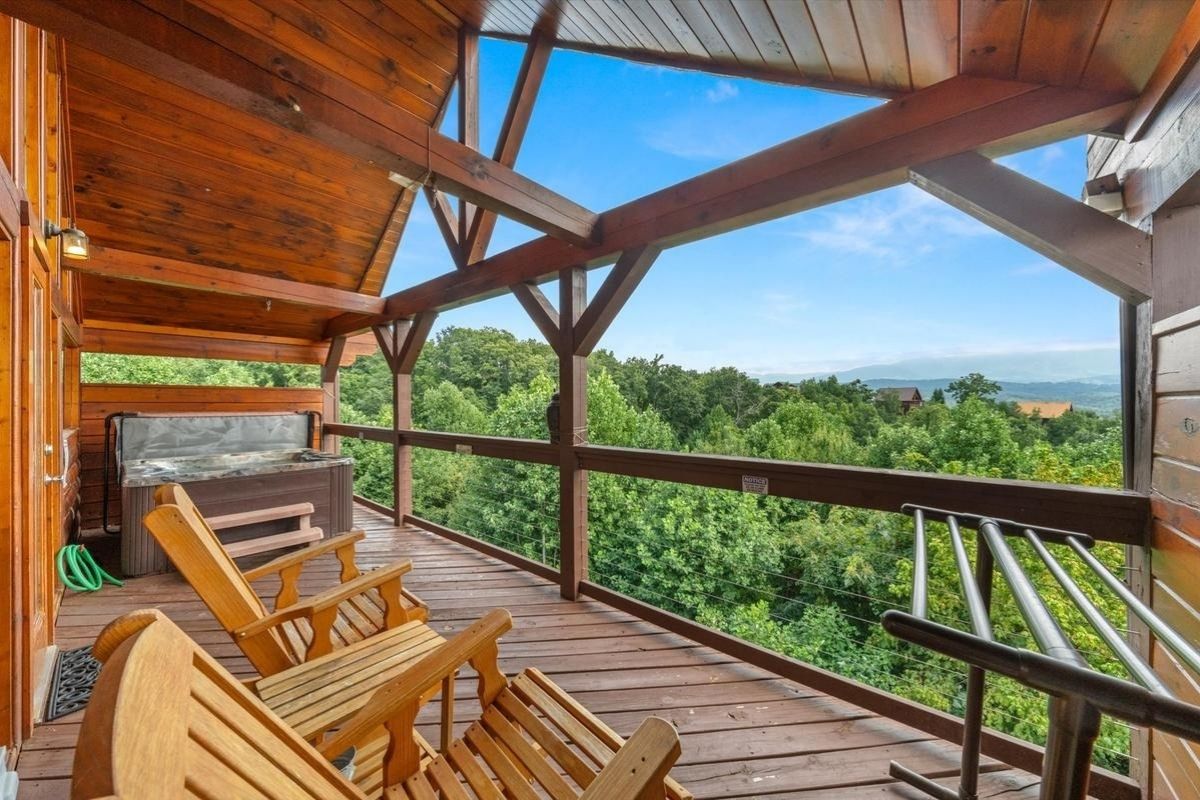
Decks and elevated outdoor spaces. Smoky Mountain cabins frequently have decks at significant elevation with mountain views. Deck structural integrity, railing height and condition, and guest access to elevated spaces are liability factors worth discussing with your insurer.
Weather and natural events. The Smoky Mountains experience ice storms, high winds, and occasional severe weather that can cause structural damage, downed trees, and roof damage. Confirm that weather-related damage is covered under your policy and understand any deductibles that apply.
Wildfire. Portions of the Smoky Mountain region have experienced wildfire events, including the significant fires of 2016 that affected Gatlinburg and surrounding areas. Wildfire coverage is worth confirming explicitly, as some policies in fire-prone regions have exclusions or separate deductibles for wildfire damage.
What to Ask Your Insurance Provider
If you're not certain about your current coverage, these questions will help surface any gaps:
- Does my current policy cover short-term vacation rental activity, including paying guests?
- Is guest-caused property damage covered? Up to what limit, and what documentation is required to file a claim?
- What liability coverage do I have if a guest is injured on the property? Does this include hot tub, deck, and outdoor fire feature incidents?
- Is loss of rental income covered if the property is uninhabitable due to a covered event?
- Are there specific requirements or exclusions related to how the property is managed that affect coverage?
- Does the policy cover theft by guests?
Get answers in writing. Insurance coverage is only as reliable as what's documented in the policy — verbal assurances from an agent don't determine what a claim adjuster will approve.
How Property Management Intersects With Insurance
One aspect of insurance that vacation rental owners sometimes overlook is how their management arrangement can affect their coverage.
Some insurers require notification if a property is professionally managed. Others have specific requirements around how the management company's liability interacts with the owner's policy. A few policies include the management company as an additional insured, which can simplify claims involving management activities.
If you're working with a property management company — or considering switching to one — it's worth confirming with your insurer how the management arrangement affects your policy terms. A reputable property manager will be transparent about their own insurance coverage and how it relates to the properties they manage.
At Colonial Properties, we're happy to discuss how our management program interacts with owner insurance arrangements as part of our onboarding conversation. We don't provide insurance advice, but we can help you understand the questions worth asking.
The Bottom Line
Insurance isn't the most exciting topic in vacation rental ownership. But an uncovered claim — a guest injury, significant property damage, a weather event that takes your cabin offline during peak season — can be financially devastating in ways that dwarf the cost of adequate coverage.
The Smoky Mountain market is a strong one, and your cabin is a real asset worth protecting properly. Take the time to confirm that your coverage is actually built for what your cabin is doing — not just for what your policy assumed it would be doing when it was written.
If you have questions about what responsible cabin management looks like — including how we work with owners on property protection and maintenance — our Owner Success Team is happy to talk.

